- 23545 Jeddah, Kingdom of Saudi Arabia
- info@bioveragroup.com
Office Address
123/A, Miranda City Likaoli
Prikano, Dope
Phone Number
+0989 7876 9865 9
+(090) 8765 86543 85
Email Address
info@example.com
example.mail@hum.com
123/A, Miranda City Likaoli
Prikano, Dope
+0989 7876 9865 9
+(090) 8765 86543 85
info@example.com
example.mail@hum.com







 by Biovera
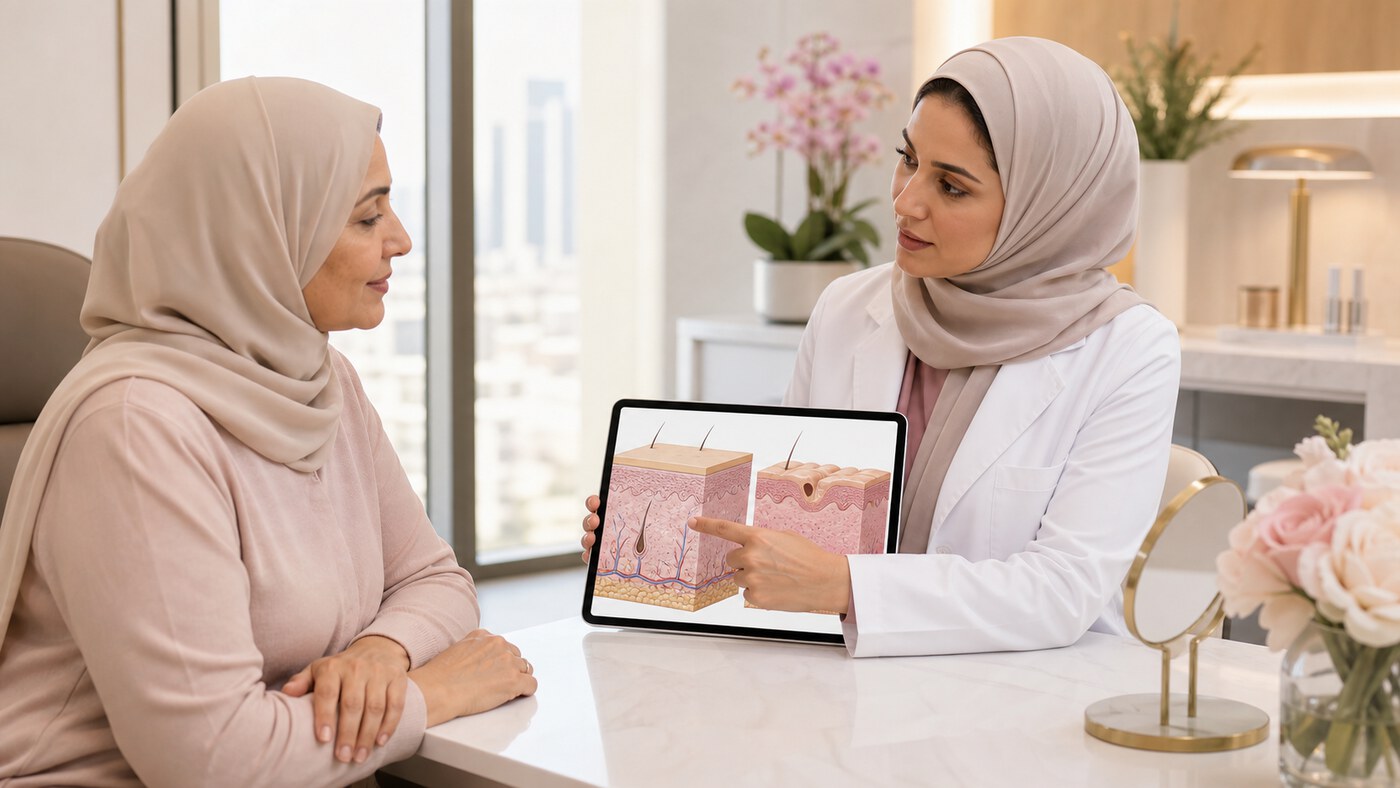
Skin ageing is a complex, multi-layered process. Understanding what happens beneath the surface is essential for any physician designing a regenerative treatment plan.
The outermost layer that protects against environmental damage, bacteria, and water loss. With age, the epidermis thins and its barrier function weakens, making the skin more vulnerable.
Contains collagen, elastin, blood vessels, and nerves. It is where most visible signs of ageing appear — wrinkles, sagging, and loss of elasticity. Around 75–80% of the dermis is collagen.
Stores energy, cushions the body, and connects skin to deeper structures. Volume loss in this layer contributes to facial sagging and a tired appearance.
Every second, your skin is:
The ECM is the network of proteins and molecules that surrounds skin cells. It is built primarily from collagen, elastin, and hyaluronic acid. As we age, the ECM breaks down faster than it can be rebuilt — leading to visible ageing. TC-MAX and POLY-N products are designed to support ECM restoration.
The Saudi climate — high temperatures, low humidity, and strong UV radiation — places additional stress on all three skin layers. Patients often present with both intrinsic ageing (genetic) and extrinsic ageing (environmental). Biovera's integrated system addresses both.